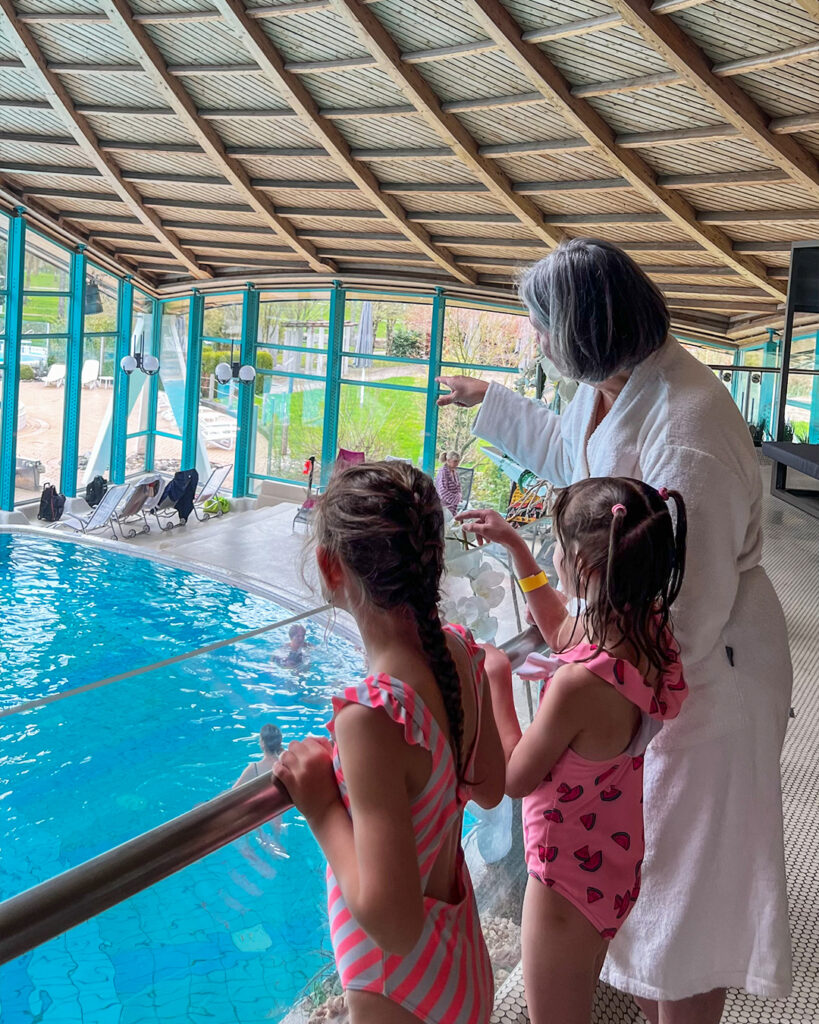
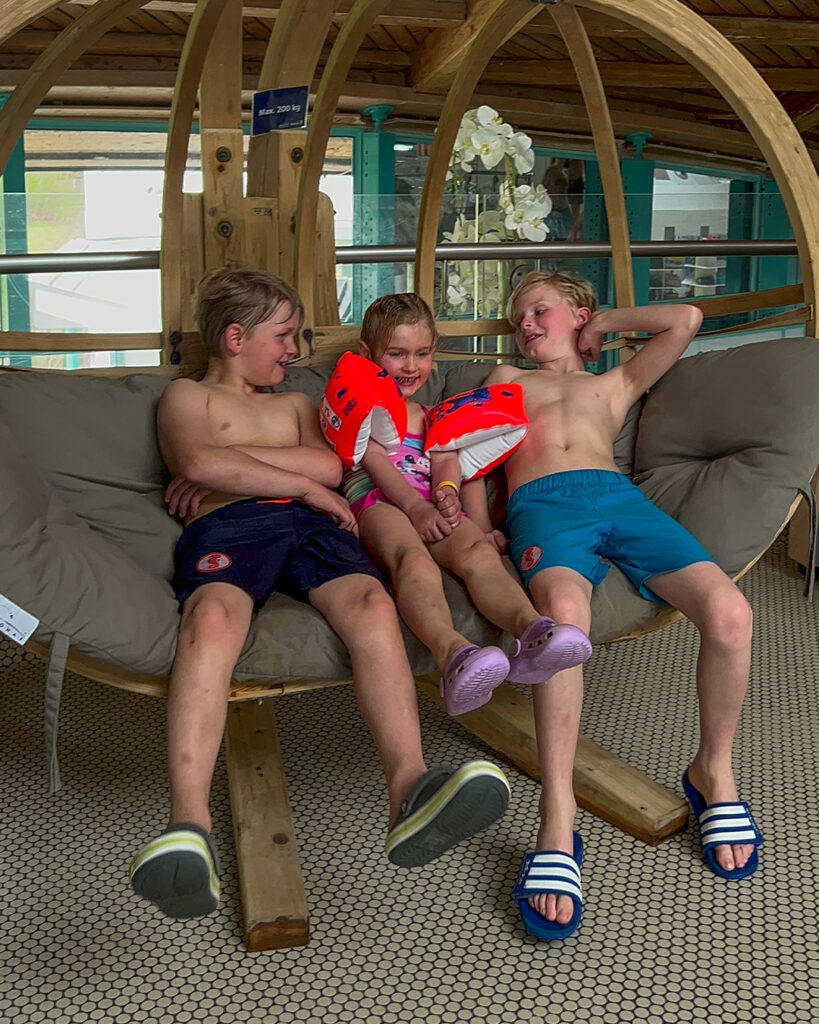
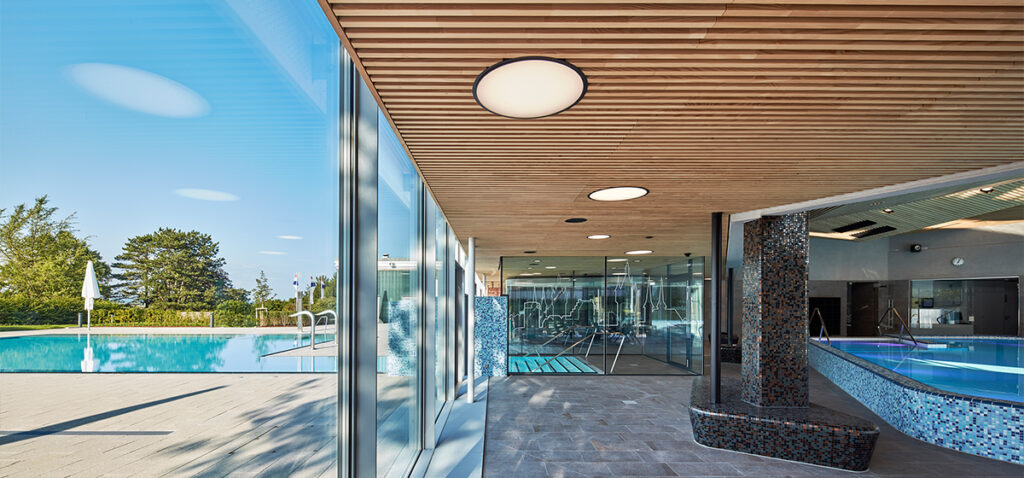
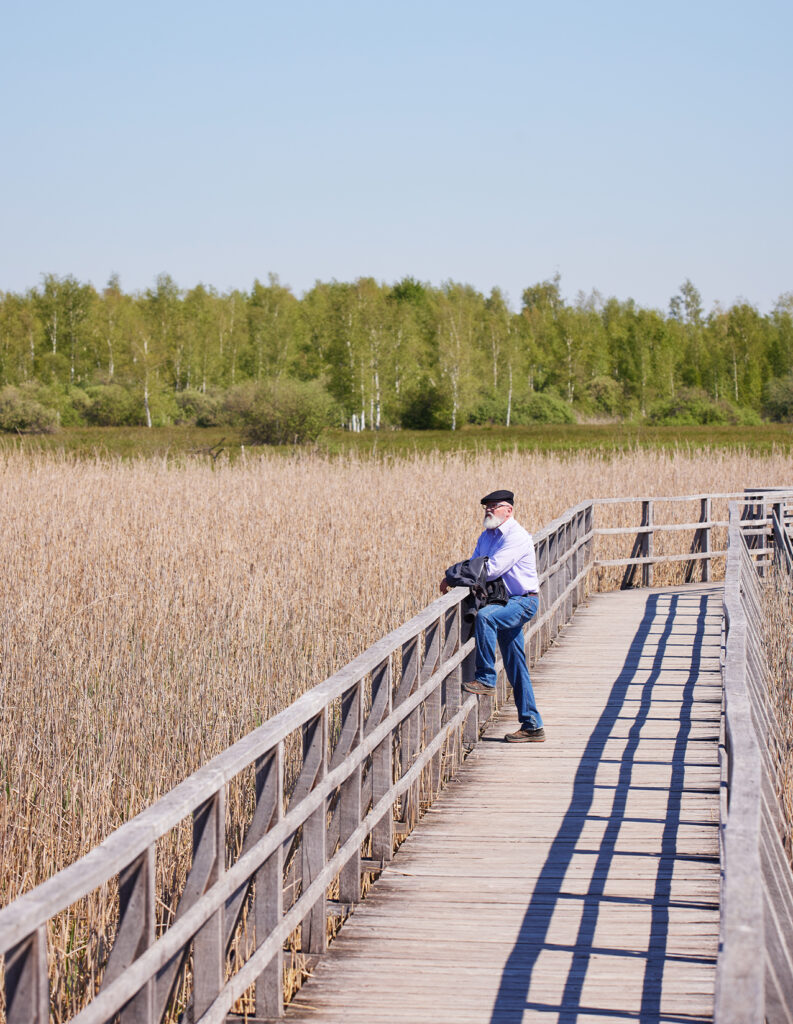
Häufig verbindet man Thermen mit Ruhe und Entspannung. Mittlerweile sind sie jedoch für viele Familien ein Ort für eine gemeinsame Auszeit geworden. Während die Kleinsten erste Erfahrungen im Wasser sammeln, entdecken ältere Kinder Rutschen, Spielbereiche oder nehmen an Schwimmkursen teil. Viele Thermen in Baden-Württemberg haben ihr Angebot darauf abgestimmt und ermöglichen es, die unterschiedlichen Interessen von unterschiedlichen Generationen miteinander zu verbinden..
Die Freude am und im Wasser beginnt oft schon in den ersten Lebensmonaten. In Bad Boll beispielsweise können Babys beim Babyschwimmen gemeinsam mit ihren Eltern erste Eindrücke sammeln und das Element Wasser spielerisch kennenlernen. Im Lauf der Zeit verändern sich die Wünsche. Dann werden flache Becken, Spielmöglichkeiten und Rutschen interessant. In der Bodensee-Therme Überlingen stehen dafür ein Kleinkinderbereich sowie zwei Wasserrutschen für Kinder ab sechs Jahren zur Verfügung: Carl’s Wellenflitzer und Übi’s Silberblitz. Ideal für den ersten Nervenkitzel im Wasser.
Auch das Leuze in Stuttgart richtet sich mit seinem Kinderland an die jüngsten Badegäste. Auf rund 600 Quadratmetern gibt es ein Badeangebot für Kinder bis etwa sieben Jahre mit Planschbecken und einem Nichtschwimmerbecken für die etwas älteren. Ein interaktives Aquarium, eine Stillecke sowie Wickelmöglichkeiten und weitere familienfreundliche Einrichtungen sind ebenfalls vorhanden.
Viele Thermen ergänzen ihre Angebote um besondere Programmpunkte für Familien. Auch die Keidel Therme in Freiburg bietet mit ihrer Kindersauna die Möglichkeit, Kinder behutsam und spielerisch an das Saunieren heranzuführen. Außerdem gibt es einen Spielplatz im Außenbereich, auf dem sich die Kids nach dem Baden oder Saunieren nach Herzenslust austoben können.
Regelmäßige Familientage schaffen darüber hinaus willkommene Gelegenheiten für gemeinsame Auszeiten. Im Solemar in Bad Dürrheim findet an jedem zweiten Samstag im Monat ein Familientag statt. Spielgeräte im Wasser, wechselnde kindgerechte Animationen und spezielle Aufgüsse gehören dort zum Programm. Dementsprechend sind an diesen Tagen natürlich auch Familien mit Kindern im Saunabereich herzlich willkommen.


Ein ähnlicher Gedanke steht hinter dem Familiensamstag in der Balinea Therme Bad Bellingen. Hier können Eltern und Kinder gemeinsam Zeit im Thermalwasser verbringen. Ergänzt wird das Angebot durch die Familien-Totes-Meer-Salzgrotte. Kinder ab vier Jahren können dort im wohltuenden Totes-Meer-Salz spielen, während eine Märchenerzählerin Geschichten vorträgt.
Für viele Kinder gehören die ersten selbst geschwommenen Meter zu den ganz besonderen, prägenden Erlebnissen. Es entstehen Erinnnerungen, die bleiben. Entsprechend wichtig sind Angebote, die das Schwimmenlernen unterstützen oder Raum zum Üben schaffen.
Im Sport- und Familienbad des Solymar in Bad Mergentheim stehen dafür ein 55 Quadratmeter großer Eltern-Kind-Bereich, ein Sportbecken sowie zwei Rutschen für Kinder und Jugendliche ab sechs Jahren zur Verfügung. So gibt es für unterschiedlichste Altersgruppen passende Möglichkeiten, sich im Wasser auszuprobieren. Auch in Solebad Bad Wimpfen werden Kinderschwimmkurse angeboten. Zusätzlich ist dort samstags Familientag; der Eintritt ist für die eigenen Kinder bis 16 Jahre kostenlos.
Besondere Programmtage setzen weitere Akzente. Dazu zählt der „Plitsch-Platsch-Plansch-Tag“ im ThermalBad Überkingen, der zweimal jährlich stattfindet. Dabei stehen unter anderem Aqua-Bingo, Kindersauna, Abenteuer auf einer kleinen Rutsche sowie verschiedene Wasserspiele auf dem Programm.

Vom Babyschwimmen über spezielle Kinderbereiche bis hin zu Familientagen und Schwimmkursen: Baden-Württembergs Thermen zeigen, wie vielfältig Familienzeit im Wasser aussehen kann. Sie schaffen Gelegenheiten, gemeinsam Zeit zu genießen, Neues zu entdecken und den Alltag für einige Stunden hinter sich zu lassen.
Ihre besondere Stärke liegt dabei in ihrer Vielfalt: Während Kinder das Wasser auf ihre ganz eigene, altersgerechte Weise erleben können, finden Erwachsene Momente der Entspannung. So werden Thermen zu Orten, an denen Erlebnis und Erholung, Spaß und Wohlbefinden zusammenkommen.
https://rehaklinik-bad-boll.de/therapie-erholung/mineraltherme/schwimmen-fuer-babys/
https://www.keideltherme.de/angebote/kindersauna/
http://www.balinea.de
https://www.thermalbad-ueberkingen.de/index.php?id=24
https://www.solebad-badwimpfen.de/preise-oeffnungszeiten/preise
https://www.solebad-badwimpfen.de/unser-solebad/kurse-weitere-angebote
http://www.solemar.de
https://www.solymar-therme.de/sport-familienbad.html
https://www.stuttgarterbaeder.de/leuze/kinderland
https://www.bodensee-therme.de/familien
For many people today, taking time out from everyday life is an important part of their work-life balance. In the spas and health resorts of Baden-Württemberg, this time out takes place in a very special way: embedded in towns and communities steeped in cultural history, supported by natural remedies and shaped by a long tradition of health and bathing. Whether it's a few hours in a day spa, a wellness weekend, or a longer stay, the offerings are diverse and range from classic treatments to modern wellness concepts that combine recreation, exercise, and relaxation.
Wellness in Baden-Württemberg's spas and health resorts is based on natural resources and proven treatments. Thermal and saltwater baths, mud baths, and Kneipp treatments form the basis of the services offered in many places. These are complemented by massages, baths, saunas, and other treatments for relaxation and regeneration. Wellness takes place in thermal baths as well as in wellness hotels and health resorts – depending on personal needs, as a short break or as a consciously planned recreational stay. The close connection between nature, health, and recreation continues to shape the understanding of wellness in health resorts to this day.
Today's wellness landscape is closely linked to traditional bathing culture. Historic bathing facilities such as the Cassiopaia Therme in Badenweiler, the Friedrichsbad in Baden-Baden, and the Palais Thermal in Bad Wildbad still represent a tradition in which conscious bathing, the use of natural thermal water, and the combination of architecture, tranquility, and regeneration play a central role. These places continue to shape our understanding of wellness today and demonstrate how timeless and valuable bathing culture can be.
Over time, this has given rise to a modern wellness culture that is more responsive to individual needs. Spas such as the Adelindis Therme in Bad Buchau and the Vita Classica Therme in Bad Krozingen combine natural remedies with contemporary wellness offerings. Modern architecture, flexible usage options, and an expanded range of relaxation and wellness services complement the tried-and-tested elements of the bathing tradition. Today, wellness stands for a conscious break—supported by experience, quality, and further development.
Those who value certified quality among the wide range of offerings will find it in the Wellness Stars-certified wellness areas in hotels, spas, and health resorts. The seal of quality has been in existence since 2004. It distinguishes hotels, spas, and resorts throughout Germany that meet specified quality standards.
The Wellness Stars quality criteria are based on many years of experience and feedback from guests, and show what makes for a harmonious wellness stay. Among other things, the facilities and design of the wellness areas, the quality of the treatments, the qualifications and service understanding of the staff, authentic regional references, holistic service concepts, and aspects of sustainability are evaluated. Depending on the type of facility—hotel, thermal spa, or health resort—segment-specific minimum requirements apply, supplemented by a points system and service review. This is based on regular, independent audits according to defined criteria that create transparency and comparability. This provides guests with clear guidance when choosing a suitable wellness destination.
Wellness hotels certified by Wellness Stars combine spacious spa areas with an atmosphere that promotes tranquility and mindfulness. Carefully designed rooms, attentive service, and offerings that focus on relaxation characterize the overall experience. Surrounded by nature, traditional thermal springs, and established health resorts, these are places where exercise, culture, and relaxation come together naturally.
Thermal baths that have been awarded the Wellness Stars seal of approval impress with their harmoniously designed water and sauna landscapes as well as wellness and beauty offerings. Whether as a day spa or an active recreation offering, a soothing and health-promoting break is guaranteed. Criteria such as the variety and equipment of the pools, the number of saunas, infrared cabins, and cooling facilities, the variety of treatments and applications on offer, the variety of beauty treatments, the service orientation of the establishment, cleanliness and safety, architecture, and location in terms of accessibility are examined for the quality seal. Additional checks by independent testers ensure – as in the hotel segment – that quality is regularly reviewed and guests find an environment that guarantees relaxation and recreation.
Award-winning medical wellness hotels or health resorts combine health services tailored to guests in a feel-good atmosphere with medical and therapeutic care under doctor supervision. In addition to qualified specialist staff, local remedies such as mud, brine, or thermal water are used in many wellness treatments. This creates a combination of relaxation, prevention, and targeted health promotion.
The spas and health resorts of Baden-Württemberg combine traditional bathing culture with modern wellness offerings of certified quality. From classic thermal baths to contemporary health resorts, they demonstrate how relaxation and wellness have evolved without losing sight of their health-oriented foundations. The Wellness Stars make this quality visible and offer reliable guidance for anyone looking for conscious relaxation and high-quality recreation.
natur.erholt – Heilbäder, Kurorte & Wellness in Baden-Württemberg
https://naturerholt.de/
https://naturerholt.de/offers_category/erde/
https://naturerholt.de/offers_category/wasser/
https://naturerholt.de/offers_category/luft/
https://naturerholt.de/pauschalangebote/
Wellness Stars Deutschland – Qualität & Zertifizierung
https://www.wellness-stars.de/
https://www.wellness-stars.de/Unsere-besten-Wellnesshotels-in-Deutschland
https://www.wellness-stars.de/Hotels/Ausgezeichnete-Wellnesshotels-in-Baden-Wuerttemberg
https://www.wellness-stars.de/Unsere-besten-Thermen-in-Deutschland
https://www.wellness-stars.de/Gesundheitsresorts
https://www.wellness-stars.de/Ueber-die-Wellness-Stars
https://www.wellness-stars.de/Die-Wellness-Stars-Zertifizierung
https://www.wellness-stars.de/Das-Wellness-Stars-Qualitaetssiegel
https://www.wellness-stars.de/Unser-Qualitaetsversprechen-fuer-Wellnessgaeste
https://www.wellness-stars.de/Wellness-Angebote
https://www.wellness-stars.de/Wellness-Angebote/Day-Spa-Angebote
https://www.wellness-stars.de/Wellness-Angebote/Wellness-Wochenende-in-Deutschland
Ergänzende Grundlage
Magazin „Erfrisch dich“, Seiten 27–29
Whether gentle hills, crystal-clear lakes, or ancient moorlands: Upper Swabia shows nature at its most pristine. Since the last ice age, the moor has shaped the landscape, which is mysterious, calming, and full of life. This idyllic setting, with its charming, historic towns and a variety of natural highlights, invites you to explore. A place where you can literally immerse yourself in the moor and feel the power of a unique ecosystem.

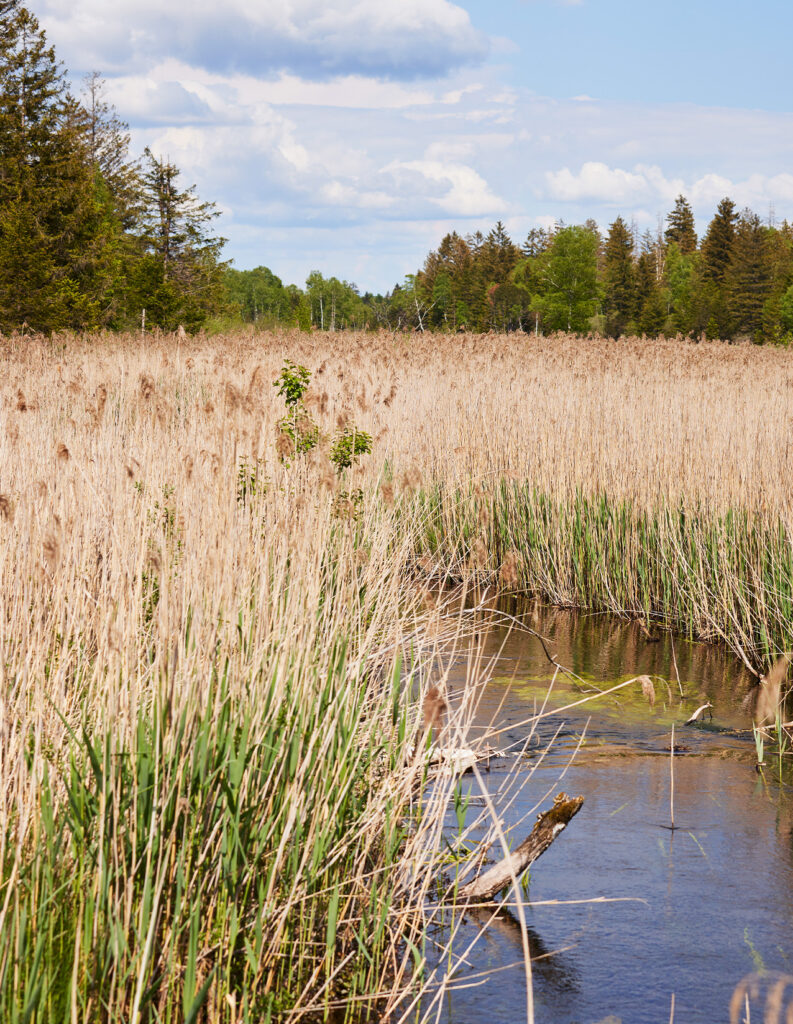
The moorland region in Baden-Württemberg, more precisely in Upper Swabia, is a unique natural area steeped in history: around 12,000 years ago, at the end of the last ice age, raised bogs and fens formed here, which still characterize the region today. These are much more than just fascinating natural backdrops; they are habitats full of biodiversity and, at the same time, retreats for anyone seeking peace and regeneration. You can experience this up close on numerous hiking and cycling trails. Whether through outdoor activities or soothing moor baths, the healing power of the moor makes every encounter something special. Numerous initiatives and associations are committed to preserving these ecosystems and invite young and old alike to discover them consciously.
The Federseemoor in Bad Buchau: A 1.5 km long wooden walkway leads deep into the reeds and offers nature experiences all year round. On a clear day, the view from the observation tower stretches all the way to the Alps.
The Wurzacher Ried: The “Riedrunde” trail leads through one of the most beautiful high moor landscapes in southern Germany, offering impressive insights dating back to the Ice Age.
The Steinacher Ried near Bad Wurzach: A circular hiking trail leads through these pristine moors and shows how a raised bog has developed over thousands of years.


The moor is not only a scenic highlight, but also a proven remedy. Especially in the moor spas of Bad Buchau, Bad Wurzach, and Bad Waldsee, the valuable peat unfolds its beneficial effects on joint problems, metabolic disorders, or simply for deep relaxation. Heated to a pleasant 45 degrees Celsius with thermal water, the peat can become a healing bath for body and soul. An experience that combines relaxation and regeneration in a completely natural way. Important: a preliminary consultation with a doctor is required before the moor bath to ensure that nothing stands in the way of the treatment.

In addition to the moors, Upper Swabia offers numerous other opportunities for outdoor adventures, water sports, and relaxation:
High up in the climbing forest
For anyone who wants to combine exercise and nature, the climbing forest in Bad Waldsee offers athletic challenges surrounded by greenery. Visitors can view the forest from a new perspective at lofty heights.
The Wackelwald
The Wackelwald in Bad Buchau is a real highlight for explorers of all ages. An exciting nature trail takes you through a boggy forest with “wobbly” ground. Definitely an experience you won't forget.
The Nature Theme Park
The Nature Theme Park in Bad Saulgau is fun for the whole family. There are 12 interactive nature discovery stations where you can learn about the diverse nature of the region.
Pure relaxation with Kneipp & Moor
Bad Waldsee is a true oasis of well-being for holistic relaxation. Here, the power of the earth meets the healing effects of Kneipp therapy. The oldest and largest Kneipp association in Germany is based here.
Upper Swabia combines natural beauty, healing powers, and cultural diversity. In spa towns such as Bad Buchau, Bad Wurzach, Bad Waldsee, and Bad Saulgau, those seeking relaxation will find peace and renewed energy. The region slows down, inspires, and stays in your heart. A trip here is a treat for all the senses.
Entspann dich Magazin: https://www.yumpu.com/de/document/read/69092890/magazin-entspann-dich
Erhol dich Magazin: https://www.yumpu.com/de/document/read/65390659/erhol-dich-das-magazin-uber-walderholung-und-mehr
Tourismus Bad Saulgau: https://www.bad-saulgau-erleben.de/naturerleben/naturthemenpark/
What would a spa town be without its spa gardens? Only half as beautiful. Spa gardens have been around for centuries—they are oases of calm and an integral part of health culture. Here, scenic beauty meets therapeutic effects: whether walking, doing breathing exercises outdoors, or simply pausing on a park bench, spa gardens offer pure relaxation and actively promote well-being. But what makes a spa garden special? And where in Baden-Württemberg can you find particularly beautiful examples?
No spa town without a spa park – The first spa parks were created as early as the 17th century, developing into a distinct type of settlement in Europe and becoming a central feature of many spa towns. But what makes a spa park? Spa parks were more than just beautifully designed parks; they played a crucial role in traditional European spa culture. They combined therapeutic treatments with exercise, healthy air, and social events. To this day, they combine health, nature, and culture in a very special way and invite visitors to relax and unwind.
The spa gardens and parks in Europe are as numerous and diverse as the spas themselves. In March 2015, an international symposium in Baden-Baden took an in-depth look at the design, functional, and historical qualities of these facilities.
Many spa gardens feature elements such as avenues lined with trees, bandstands, artistically planted flower beds, and spacious promenades. They are closely intertwined with the urban environment and the surrounding cultural landscape. The question of how to deal with this cultural heritage plays an important role, not least in the context of the UNESCO initiative “Great Spas of Europe” – because a spa park is always a living monument.


The Badpark in Überlingen was once the garden of a Capuchin monastery and has been officially designated a spa park since 1953. Today, it invites visitors to relax with its impressive, listed trees, stylish benches by the lake, and picturesque promenade. An annual highlight is the Promenade Festival in the spa park and on the promenade directly by the lake.
The spa gardens are located directly in front of the spa house and are a green oasis in the heart of the city. The flower beds are particularly special, planted in changing shades of color to match the season. The park is also an international meeting place for the city and a venue for a wide range of events.
The spa gardens in Bad Mergentheim are a true oasis of peace and relaxation. Here, idyllic nature meets health expertise: 200-year-old healing springs, a graduation tower for respiratory therapy, and fitness activities in the outer spa gardens provide relaxation on many levels. Cultural events such as spa concerts and the spa gardens festival also take place here.
The idyllic spa gardens in the heart of the city offer moments of relaxation with their 300-year-old avenue of lime trees directly on the banks of the Nagold, the spa gardens lake, and numerous romantic nooks and crannies. A special highlight is the pump room with spring water from the famous Paracelsus spring. During events such as the Festival of Lights, atmospheric light installations transform the park into a colorful sea of colors.
The spa gardens in Bad Boll delight visitors with their impressive 19th-century trees and a lovingly restored Biedermeier-style promenade hall. The grounds invite you to stroll, linger, and enjoy yourself—whether on winding paths or along the rose-adorned promenade hall.
The Sole-Aktiv-Park is a green oasis that combines relaxation with active experiences. Exciting discoveries await you on the Sole-Erlebnisweg (Sole Experience Trail), while barefoot and exercise trails, Kneipp pools, and the Green Fitness Trail invite you to get active. In the sensory gardens, visitors can listen to sounds and smell and taste the scents and aromas of herbs and fruits. For children, there is a sand playground by the stream, and the beer garden, open from May to October, offers refreshing drinks and delicious food.
Baden-Württemberg offers many beautiful spa gardens, far more than are listed here. They are all definitely worth a visit and offer relaxation for body and soul.
https://www.echt-bodensee.de/attraktion/badgarten-ueberlingen-18ce3e2f6e
https://kurhaus-badenbaden.de/de/kurgarten
https://visit.bad-mergentheim.de/de/gesundheit-erholung/entspannung-sport-spiel
https://visit.bad-mergentheim.de/de/gesundheit-erholung/kurpark-kuranlagen
https://www.tourismus-bad-liebenzell.de/wp-content/uploads/2024/01/Kurpark-Flyer-2024-1.pdf
https://www.tourenplaner.lkgp.de/de/poi/freizeitaktivitaet/kurpark-bad-boll/66675166
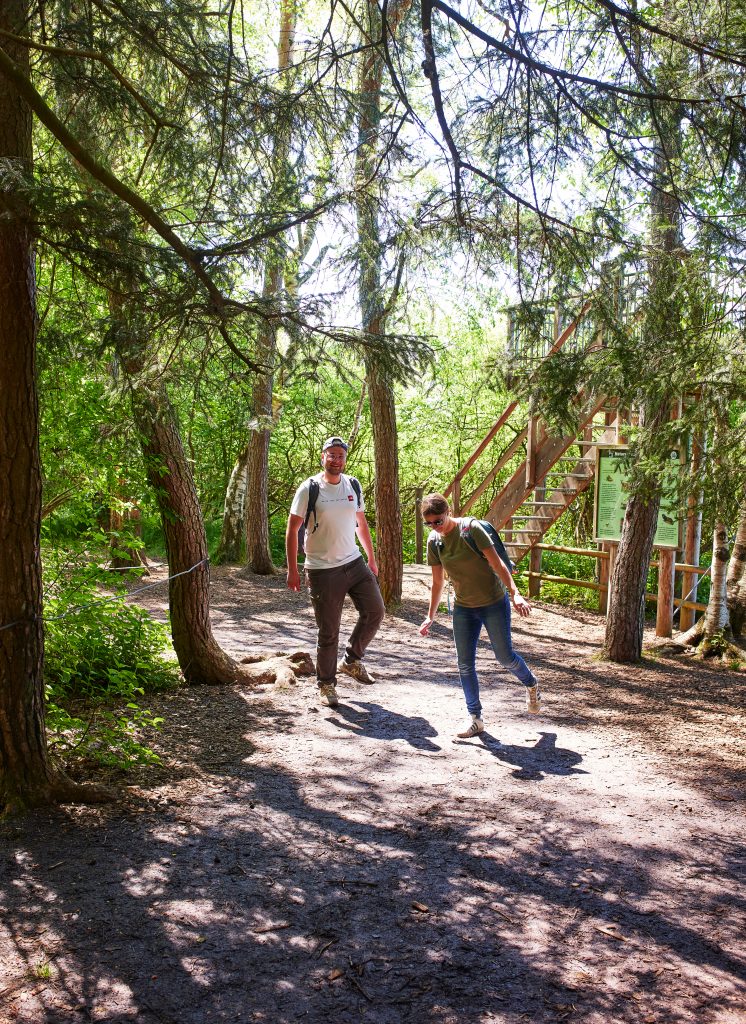
A special moor phenomenon on the outskirts of Bad Buchau is the so-called Wackelwald. It is a special excursion destination for the whole family and is open to all interested visitors.
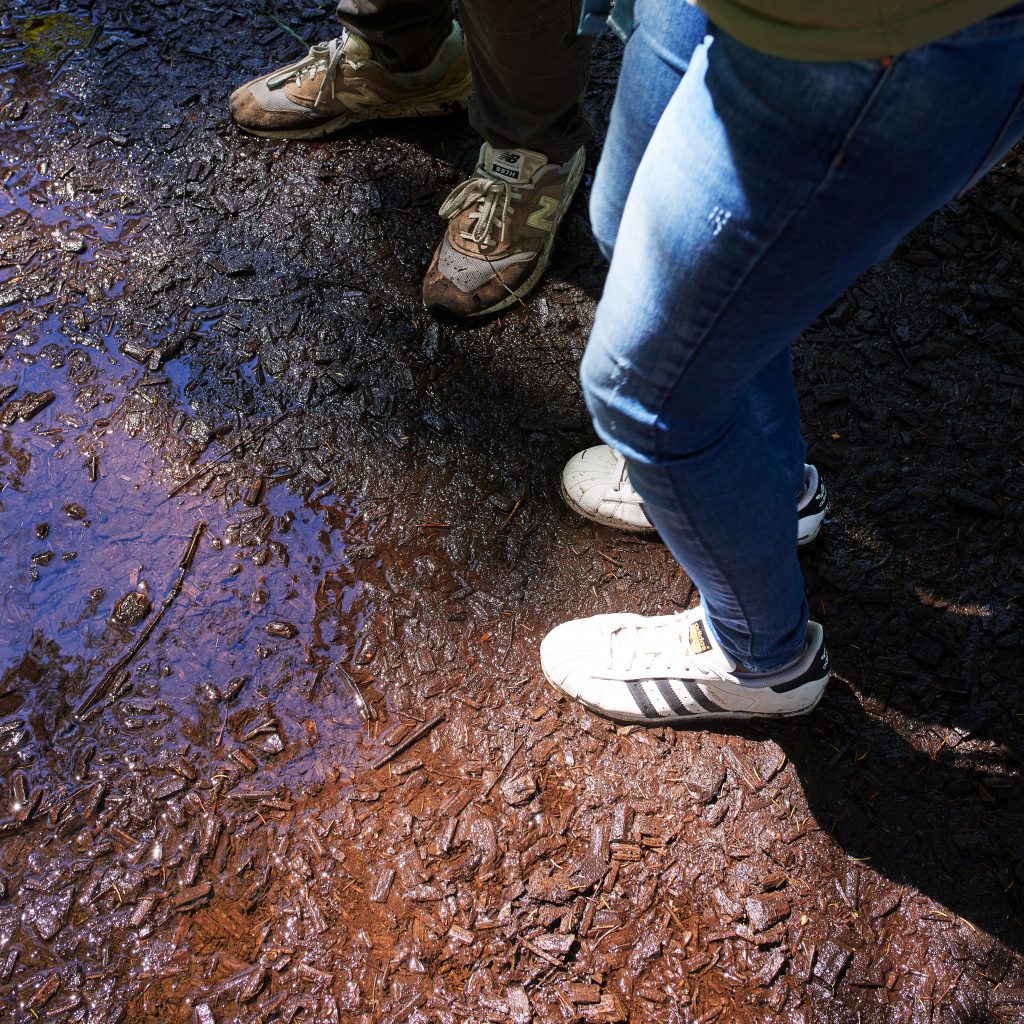
Quite simply, the trees in the forest stand on boggy ground that was created by the silting up of the post-glacial Federsee lake. A stable surface layer has formed between the roots of the trees and plants, under which is spongy soft peat soil. The soil gives way with every step and is therefore springy. This makes it very popular not only with visitors, but also with locals for jogging, for example.
There used to be an ice pond in the forest, which was used by a brewery to cool the beer cellar. After reforestation, a spruce forest later developed here. Today, the forest is no longer used for forestry and continues to develop into a near-natural moorland forest.
The forest is not only a popular excursion destination, it is also a habitat for a variety of trees, plants and animals that call the moorland forest their home:
Plants and trees:
Animals

The Wobbly Forest Trail is an approx. 600-metre-long NABU nature experience trail that leads from the Federsee parking lot through the Wobbly Forest via 8 stations. At the interactive stations and viewing points, nature lovers of all ages can learn about the formation of the Federseemoor and the inhabitants of the forest.
A little tip: If you want to have even more forest experience, you can rent a ready-packed nature exploration backpack from the NABU Nature Conservation Center for a small fee.


The days are getting longer, nature is blossoming. For many people, this marks the beginning of a time of transformation: Lent. Conscious renunciation not only marks a phase of purification and reflection in the ecclesiastical sense, but has also developed into a modern lifestyle that brings body and mind into harmony and inspires a new attitude towards life. In picturesque Überlingen on Lake Constance, fasting is seen as an opportunity to reflect on one's own lifestyle and find new ways to improve health and well-being.
Überlingen, with its idyllic location on Lake Constance, has a long tradition as a place of relaxation and fasting. For decades, fasting enthusiasts from all over the world have been drawn to the peaceful surroundings for this purpose. Attracted by the clarity of the lake and the tranquillity of nature, people find the ideal retreat here to relieve their body and mind through fasting.
Fasting methods are as diverse as their users. In Überlingen, the focus is on three approaches in particular:


For use at home, partial fasting methods are more tolerable than total fasting. Here, only certain foods are avoided, such as alcohol, animal products, sugar or sweet drinks. The fasting period can also have a long-term effect on nutritional awareness, health and balance.
Also popular: so-called "intermittent fasting". This involves giving the digestive system more time to rest by taking longer breaks between meals.
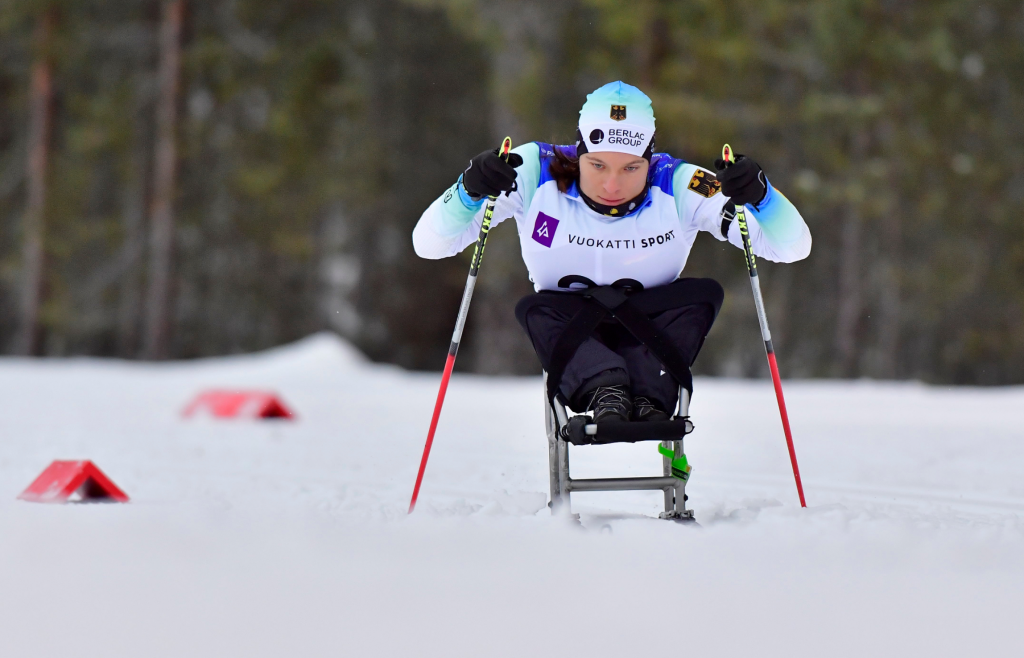
Anja Wicker has a clear focus - even when it comes to regeneration. The Paralympics winner likes to relax in spas.
Born in Stuttgart in 1991, the biathlete started cross-country skiing at the age of 13 and has been competing in cross-country skiing and biathlon since 2006. In addition to many other successes, she won gold in the 10 km biathlon distance in Sotchi in 2014 and became world champion over 12.5 kilometers in 2017. In 2022, she returned from the Paralympics in Beijing with a bronze medal. Here she tells us what she loves about her sport, how important regeneration is and why she loves the brine chamber in Bad Krozingen's thermal spa.

Ms. Wicker, first of all, congratulations on your "place on the podium" in Beijing. How long did it take you to recover from your brilliant performance on the cross-country ski run?
I wanted to sleep for four weeks straight, but I've recovered well in the meantime. However, I have already allowed myself a longer break, which has been neglected in recent years. I do a bit of sport too, but I definitely don't call it training.
You are also a very strong cross-country skier and have already won medals there. Why do you mainly compete in the biathlon?
I'm excited to be competitive in cross-country skiing. But biathlon will always be my focus. The combination of total exertion on the track and precise work at the shooting range is a great challenge and simply my passion.
After winning gold in Sochi, how do you rate your current bronze medal?
The gold medal in Sotchi definitely means the most to me. I can still remember many moments during the race. They still give me goosebumps today. But after not winning a medal at the Paralympics in South Korea, I'm over the moon about my third place, especially as I had to make up for five penalty laps.
How often do you actually have to train to achieve such success?
My training year always starts on May 1. During the first few months, the focus is on endurance and strength training. The closer the season gets, the more frequent the intensive sessions become. On average, I train six days a week, usually twice a day. That brings me up to ten to 18 hours.
How important is regeneration then? And where do you prefer to regenerate?
Regeneration is a very important aspect of everyday training. If you can do that in a spa clinic like Bad Krozingen with thermal water, that's great, of course. Going to the brine chamber every evening was a great opportunity for me to do something special for my lungs.
Thank you very much for the interview - and good luck for the future!
The Bad Krozingen thermal spa - the Vita Classica - has developed into a stylish yet functional spa palace with a spacious thermal bath, a sauna paradise and the wellness house. The brine chamber is one of the thermal spa's special experiences. The interior is an allergen-free room made of salt, glass and natural wood with a high-quality microclimate. Appointments to visit the brine cabin can be booked online.
Tohid "Toni" Sabery no longer heats up opponents, but guests: Swinging the towel instead of throwing in the towel. In the 66 boxing matches he has won, he has never thrown in the towel. And even now he only swings it elegantly to spread the fizzing infusion throughout the room. Beforehand, "Toni" Sabery welcomes his guests with a short speech:
"Welcome to my aroma journey. Peppermint, orange and lemon in combination with menthol clear the nose and cool the skin. If it gets too hot for you, take a seat one floor down. You can also leave the room at any time. Outside, please take a few steps to stimulate your circulation and then pour yourself from bottom to top and from top to bottom with the cold water hose. My infusion lasts 8-10 minutes. And now have fun and sweat well!"
Tohid Sabery has remained involved in boxing as a trainer for children and young people. However, he has found his true calling in the sauna. Following further training with the German Sauna Association, the qualified pool attendant has been able to call himself a sauna master for several years now. Today, he "heats up" sauna users three to four times a day with special infusions and is one of the best-known faces at the Aqualon Therme in Bad Säckingen.
Before the sauna: what are the benefits of a warm foot bath?
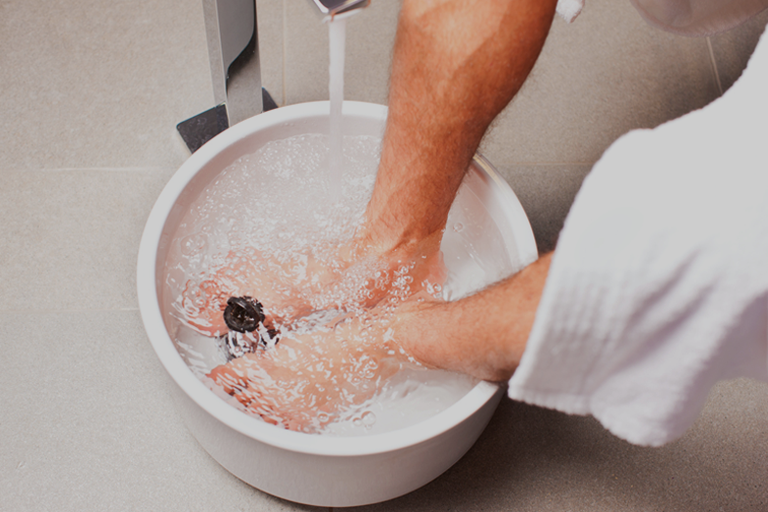
Many people don't even know why you should take a warm footbath before going to the sauna - it's already hot enough, isn't it? However, warm footbaths are an important part of a sauna session and help to prevent dizziness caused by overstrained circulation.
A warm foot bath before the sauna prepares the circulation for the heat and activates the sweat glands. But it also helps you cool down: The "cold shock" from the splash shower or plunge pool also causes the blood vessels to contract. This makes it more difficult for the blood to circulate and dissipate the heat. The warm footbath causes the blood vessels to dilate again, improving circulation and thus cooling. This reduces prolonged sweating after the sauna.

What happens during the infusion?
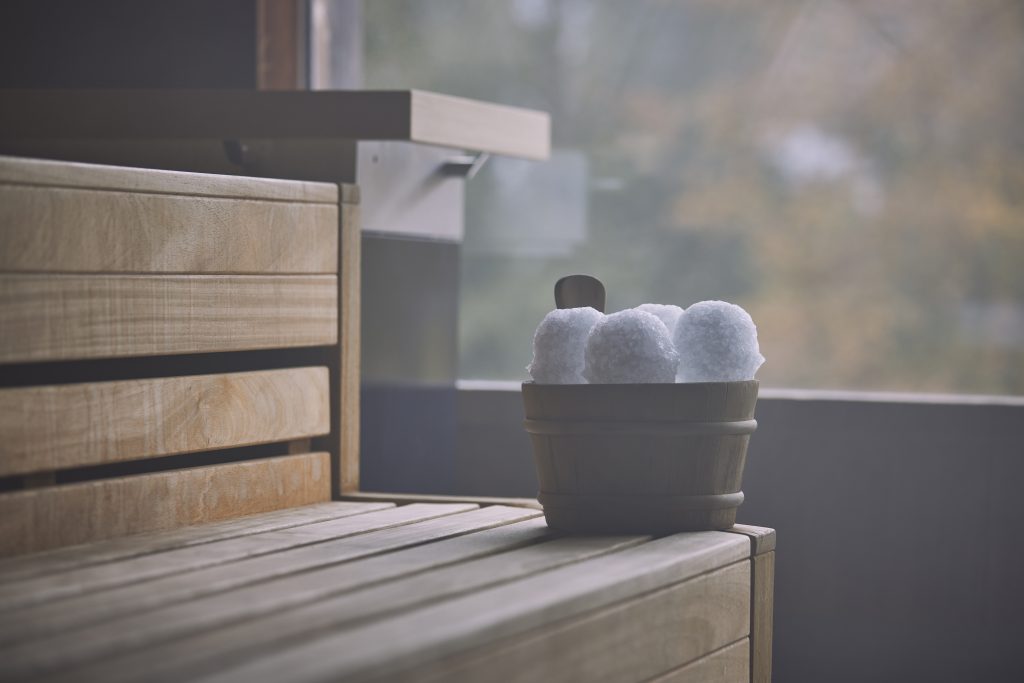
The stones hiss, the steam rises and then descends as a hot mist, causing the perceived temperature to soar. The sauna master waves his towel or a fan using a special technique that distributes the aromatized mixture of scented oils and water throughout the room. The steam settles on the skin, penetrates deep into the pores, expands the lungs - and after the first heat shock, you simply feel healthy.
What is the best way to cool down?
Jumping into the plunge pool straight after the sauna is not a good idea. This can easily lead to circulatory collapse. I recommend taking a few leisurely steps through the sauna area first and then slowly cooling your body from the bottom up. Whether you reach for the classic "Kneipp" hose or pull on the waterfall shower, dive into pools at different temperatures or take a dip in the ten degree cold natural bathing pool is a matter of taste. Do what makes you feel good!

The Aqualon Therme in Bad Säckingen awaits you with five different saunas and temperatures between 80 and 90 degrees Celsius. Beautifully designed relaxation rooms invite you to unwind, and you can cool off in the outdoor area with its natural bathing pool. The Aqualon Therme has been awarded five stars by Wellness Stars Deutschland GmbH.
Fascinating excursion destination, catalyst for children's fantasies and natural remedy. A visit to the moorland spas in Baden-Württemberg is always worthwhile - as a nature experience, family outing or wellness trip.
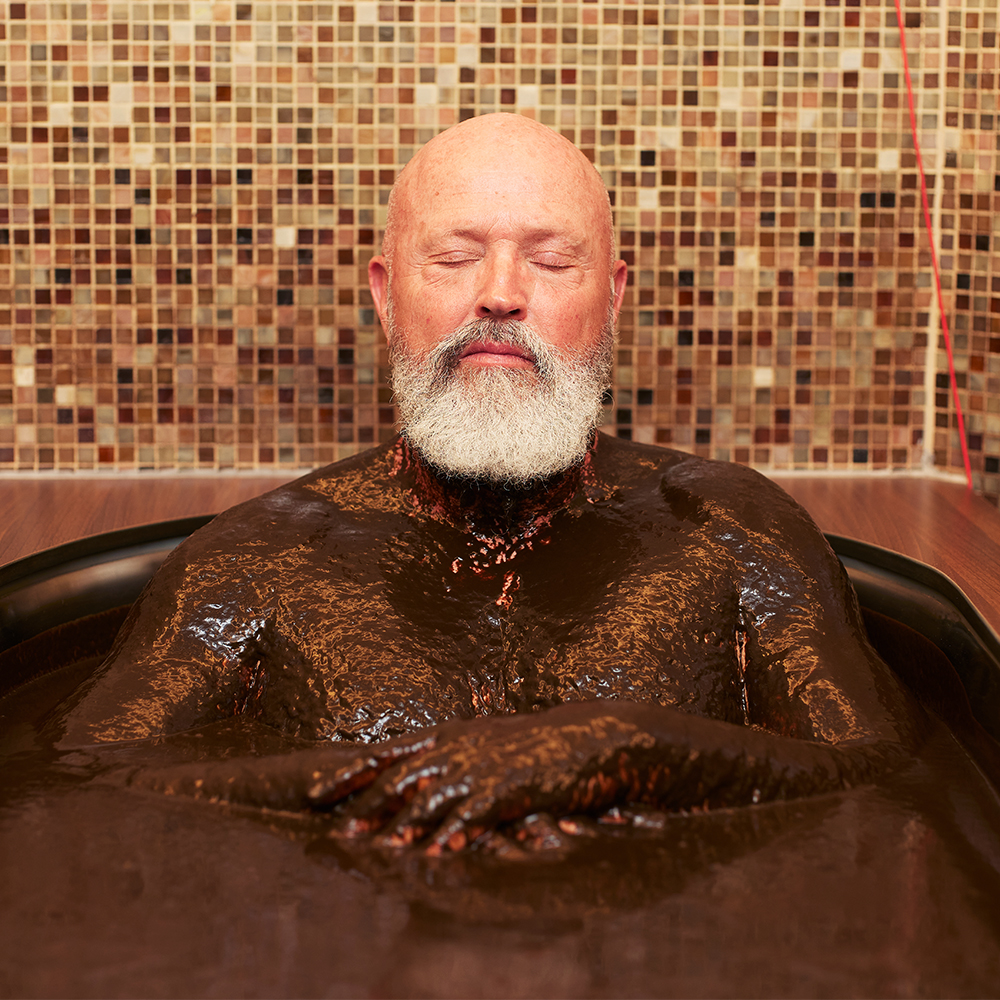
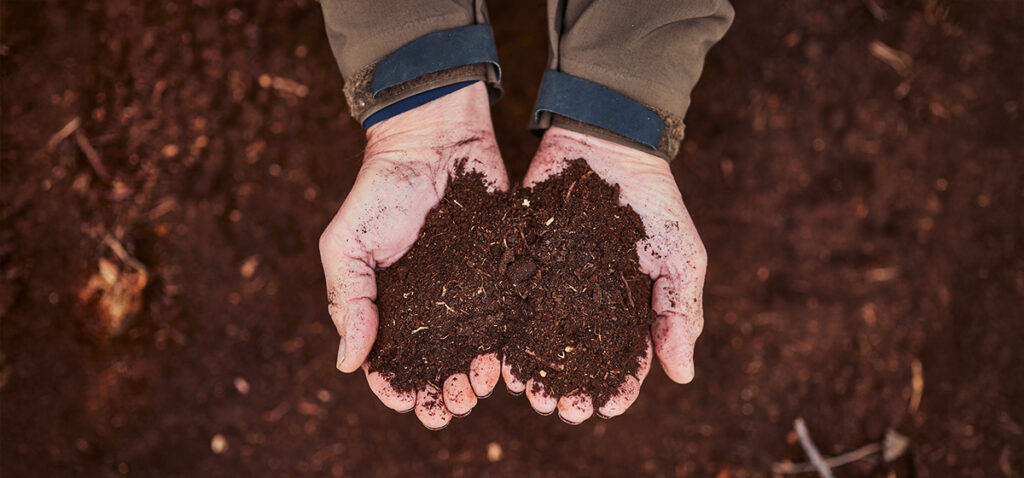
A bathtub full of peat doesn't look very inviting at first, but it feels all the better. The composition of thermal water with the valuable contents of the peat alone provides immediate deep relaxation and pain relief.
However, something else is decisive for the almost "magical" effect of a mud bath on arthrosis, rheumatic diseases and chronic pain:
Moor mud releases its heat much more slowly than water. This allows the heat to penetrate deeper into the body and raise the core body temperature to up to 40 °C in a short time.

What this "artificial fever" does:
Right on the outskirts of Bad Buchau lies a real natural paradise: the moorland of the Federsee is home to more than 265 species of birds and is labeled a “European reserve”. Here you can get closer to the unique moor landscape, its plants and animals than anywhere else - because the Federsee is accessible via a 1.5 kilometer long footbridge made of wooden planks.


The Wackelwald is also an accessible moor: a stable top layer has developed between the roots of the trees and other plants - but underneath lies spongy, soft peat soil. The floor gives way a little with every step and then springs back again. An unforgettable feeling that athletes also appreciate very much. The jogging route through the forest is very popular with locals and guests.
There are a total of 5 mud spas spread across Baden-Württemberg. 3 of them in Upper Swabia, 2 in the Black Forest. They all attract visitors with special experiences, genuine natural treasures and relaxing wellness offers.